
By Joan Odafe, News Agency of Nigeria (NAN)
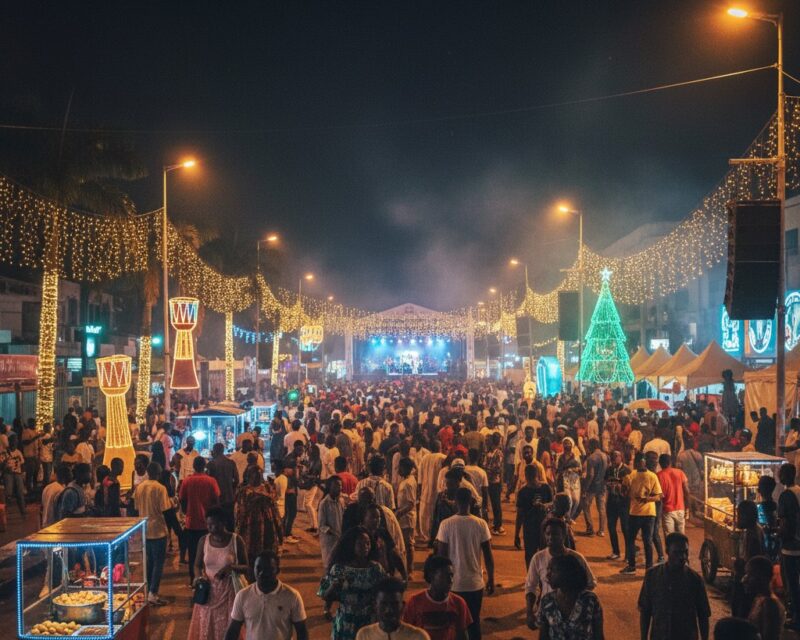
Nigeria’s tourism sector experienced a notable surge during the festive season, propelled by the Detty December phenomenon and a significant influx of diaspora visitors.
Tour operators, particularly across Lagos State, reported robust demand, driven primarily by diaspora visitors seeking to reconnect with their heritage.
The period saw hotels and airport transportation services operating at full capacity, tours reaching maximum bookings, and a rise in cultural excursions, with social media platforms amplifying the appeal of Nigerian destinations.
However, the success of the season was not without its challenges.
The festive boom showcased Nigeria’s appeal but exposed its fragile infrastructure.
In Badagry, diaspora and foreign visitors packed resorts like Whispering Palms, drawn by the town’s history.
Guests from the U.S., UK, and Germany combined leisure with tours of slave trade relics and heritage sites.
Oyindamola Fashogbon, Senior Partner for Marketing and Communications at the resort, notes, “Badagry itself is a story to tell.”
Yet, its success highlights a warning: demand is outpacing structure, planning, and policy.
Also, La Campagne Tropicana’s Ipada Festival drew global guests, who enjoyed activities like carnival day, tree planting, and movie screenings.
Despite success, organisers note that visa restrictions and tourism barriers limited participation, especially from other African countries, hindering diaspora reconnections.
These restrictions hinder tourism and make it tough for diaspora communities to reconnect.
This concern is a major issue in the tourism governance debate.
Industry experts and operators acknowledge that the period also underscores the persistent structural deficiencies that impede the sector’s growth.
The Nigeria Association of Tour Operators (NATOP) reported that logistics challenges, rising operational costs, and poor coordination pushed operators to their limits.
Flights, accommodation, and last-minute changes from diaspora guests made it tough to deliver smooth experiences.
NATOP president, Mrs Bolaji Mustapha, said, “These aren’t minor issues. They’re structural problems that hinder operators from delivering consistent, world-class experiences, even when demand is high.”
Mustapha says NATOP is shifting focus to building smarter systems in 2026, beyond seasonal booms.
Plans include leveraging tech, collaborating with airlines, embassies, creatives, and the diaspora to package Nigeria as a safe, exciting destination.
The goal is to turn festive visitors into repeat travellers with year-round packages.
“Tour operators will curate world-class cultural, heritage, food, and festival experiences.
“NATOP will promote Nigeria through international travel fairs, digital platforms, and influencers, strengthening partnerships with hotels and event organisers,” she said.
Tourism development expert, Wale Ojo-Lanre, says the sector is suffocating under a mismatched structure, appealing to President Bola Tinubu to address this.
Ojo-Lanre emphasises that Nigeria’s tourism weakness is not about assets but structure, political will, and clarity.
“Tourism is not weak. It is overwhelmed and shackled.”
He notes that treating tourism as a subset of arts and culture has diluted focus, pointing to gaps like no national waterfall development programme, no coastal tourism plan, and no framework for cruise or religious tourism.
“These are not failures of imagination. They are failures of institutional focus,” he said.
On the policy side, recent moves suggest some gaps are being acknowledged.
The Nigerian Tourism Development Authority (NTDA) and Federal Airports Authority of Nigeria (FAAN) have reached an agreement to restore tourism information desks at major airports,filling a long-missing gap.
NTDA’s Director-General,Dr Olayiwola Awakan, says airport information desks will give visitors immediate access to guides, maps, and local travel options, boosting tourism spend.
“Airports are their first point of contact.”
FAAN’s Managing Director, Olubunmi Kuku, describes aviation and tourism as “naturally interconnected”, pledging improved passenger experience and infrastructure upgrades.
Stakeholders warn that interventions like information desks are a start, but deeper structural reform is needed.
Ojo-Lanre urges, “Lift tourism out of the cage. Restore its standalone ministry. Give it voice, authority, and focus.”
The Detty December boom showed Nigeria can attract visitors.
The challenge is fixing structures to keep them coming, and spending, long after. (NANFeatures)
